US border truck crossings slip in September as Detroit gains and Port Huron drops
Inbound truck crossings fell 4.0% at the Mexican border and 1.2% at the Canadian border from a year earlier, while Detroit rose 34.6% and Port Huron fell 36.0%.
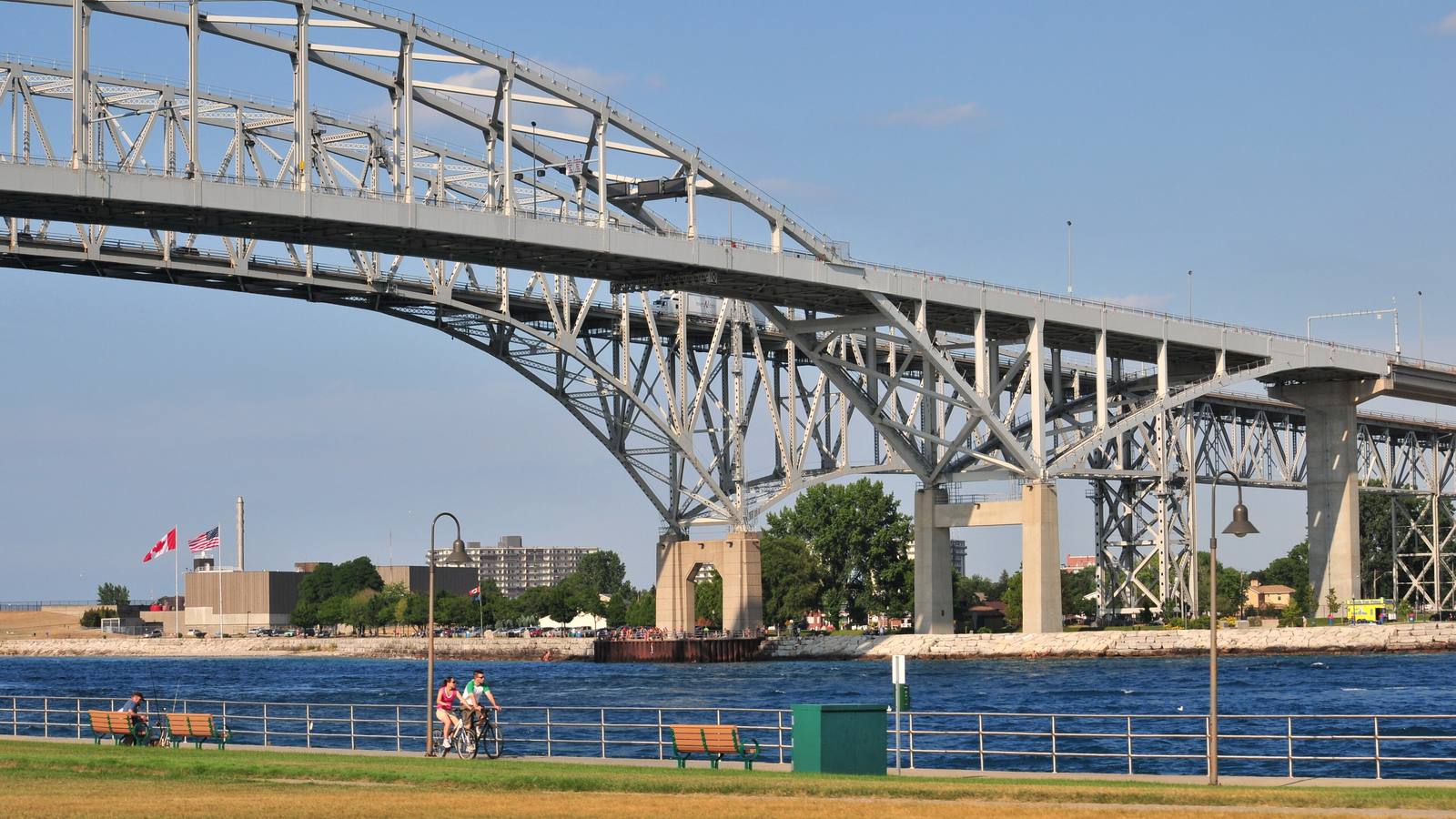
Fewer trucks entered the U.S. from both Mexico and Canada in September than a year earlier, according to federal border crossing data, though some ports saw big swings.
The figures come from the Bureau of Transportation Statistics, which publishes its border crossing entry data with monthly counts of inbound truck crossings at land ports of entry.
Southern border
Trucks entering from Mexico totaled 610,376 in September, down 4.0% from 635,915 in September 2025. That was also below August's 624,456.
For the July-September quarter, southern border truck crossings were 1,885,298, down 1.6% from a year earlier.
Results varied by port:
- Laredo, Texas, the busiest truck crossing in the data, logged 255,129 trucks, up 4.9%.
- Otay Mesa, California, had 84,845, down 0.7%.
- Ysleta, Texas, rose 2.3% to 56,644.
- Hidalgo, Texas, fell 9.9% to 55,269.
- Calexico East, California, fell 8.3% to 31,946.
- Nogales, Arizona, was nearly flat at 23,437.
Northern border
Trucks entering from Canada totaled 449,121 in September, down 1.2% from 454,488 a year earlier and below August's 456,254.
For the quarter, northern border truck crossings rose 1.2% to 1,344,804.
The largest change was in Michigan:
- Detroit logged 130,451 trucks, up 34.6% from 96,952.
- Port Huron had 61,473, down 36.0% from 95,999.
Elsewhere, Buffalo Niagara Falls, New York, had 73,931, down 1.5%. Blaine, Washington, rose 7.1% to 28,372. Champlain, New York, fell 5.5% to 22,750, and Pembina, North Dakota, slipped 1.7% to 19,891.
The BTS counts do not say why traffic shifted between Detroit and Port Huron.
What it means
The data count trucks, not the value or weight of freight, so a dip in crossings does not by itself mean less trade. Still, the numbers show where cross-border truck traffic is concentrating, which matters for drivers planning wait times and for fleets deciding where to run.